Price, quality and technical performance are no longer the only factors shaping the choice of building materials. Their carbon footprint is becoming increasingly important, bringing the energy used to power manufacturers’ factories into sharper focus.
A material’s carbon footprint can influence supplier selection from the outset, particularly in markets where project owners and contractors must account for emissions across a building’s entire life cycle. For aluminium, the energy source used at the factory has a major bearing on that footprint.
Regulatory changes are also making the carbon footprint of materials more significant. The EU’s Energy Performance of Buildings Directive (EPBD) introduces a requirement to account for buildings’ life-cycle global warming potential. From 2028, this information will have to be disclosed for new buildings with a floor area of more than 1,000 m²; from 2030, the requirement will extend to all new buildings.
For materials manufacturers, this means that emissions generated before construction even begins, including those from aluminium production, will become increasingly visible in assessments of the overall project. In practice, this could give materials with a lower carbon footprint greater weight when project owners and contractors select solutions.
The same trend is evident in aluminium imported from outside the EU. The definitive phase of the Carbon Border Adjustment Mechanism (CBAM) has been in operation since 2026 and covers, among other things, emissions from aluminium production. Here, environmental performance has a direct economic impact: emissions become part of the cost of importing goods, affecting how suppliers compete.
Buying renewable energy is one way to reduce production-related emissions. Power purchase agreements (PPAs), which provide for the long-term purchase of renewable electricity, are becoming increasingly important.
Grupa Kęty is among the businesses using this approach. In December 2025, it signed a physical sleeved PPA covering nearly 200 GWh of electricity a year for the period 2026–2029.
Part of the contracted volume comes directly from a specific wind farm, with the remaining electricity purchased on market terms. The agreement gives the Group flexibility in planning its energy requirements and allows it to balance electricity supply and demand across all Group companies. Its structure also allows further renewable energy sources to be added.
Electricity is one element of our carbon footprint that we, as a manufacturer, can influence directly. A contract linked to a specific renewable energy source gives us greater predictability in both emissions and costs throughout our 2025–2029 strategy period. It also allows us to manage the energy requirements of individual Group companies flexibly. We will report the results of these measures on the same basis as our other environmental targets.
– Maciej Budziński, Head of Environmental Protection at Grupa Kęty.
The raw material used in aluminium production also affects its carbon footprint. Alongside purchasing renewable energy, Grupa Kęty SA is therefore increasing its use of recycled aluminium.
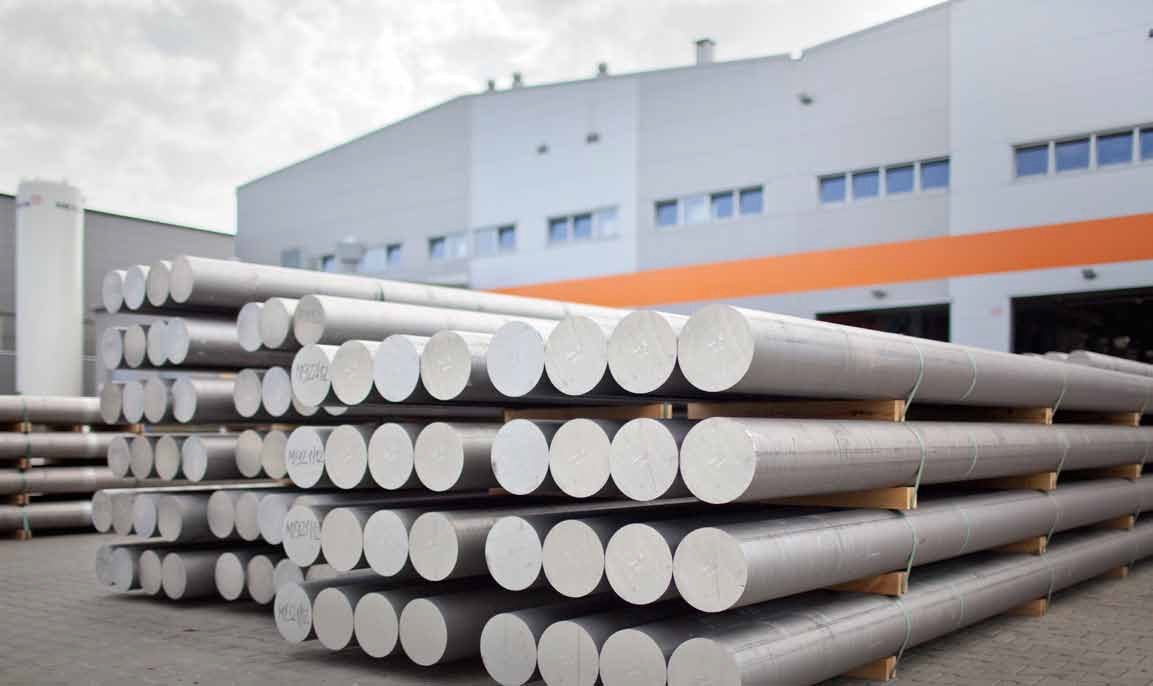
In 2025, scrap accounted for 75.9% of the feedstock used to produce billets at the Kęty foundry. Meanwhile, 42.6% of the billets used for profile extrusion had a carbon footprint below 4 tonnes CO₂e per tonne of aluminium.
For customers, this means being able to choose materials with a lower carbon footprint while retaining the performance required for specific applications. The new Environmental Product Declaration (EPD) for Aluprof’s window and door systems records a carbon footprint of 2.98 kg CO₂e per kg of system, placing the company’s solutions among the low-carbon aluminium systems available on the market.
Using Ultra Low Carbon billets containing 85% post-consumer recycled aluminium allows the carbon footprint of the resulting structures to be reduced further.
By comparison, the carbon footprint of primary aluminium production worldwide can reach 15–20 kg CO₂e per kg of aluminium, while solutions based on recycled aluminium achieve figures several times lower.
Data on the carbon footprint of materials is increasingly used in certification schemes such as BREEAM, LEED, DGNB and HQE, where EPDs provide the basis for calculating a building’s whole-life carbon footprint. For our customers, particularly in overseas markets, a product’s carbon footprint is one of the criteria for selecting a supplier. That is why we are reducing emissions from our production and providing customers with materials whose environmental performance meets the market’s growing requirements.
– Aleksandra Baksik, Sustainable Development Manager at Aluprof.
Under the Ecodesign for Sustainable Products Regulation (ESPR), the EPBD and CBAM, emissions data may become one of the required parameters when selecting materials and suppliers. The ESPR establishes a framework of environmental requirements for virtually all product groups through the introduction of Digital Product Passports (DPPs), covering products’ carbon footprints and recycled content.
Aluminium manufacturers that secure low-carbon energy sources and offer products with recycled content and a documented environmental footprint will undoubtedly gain a competitive advantage in the market for so-called ‘green aluminium’.